
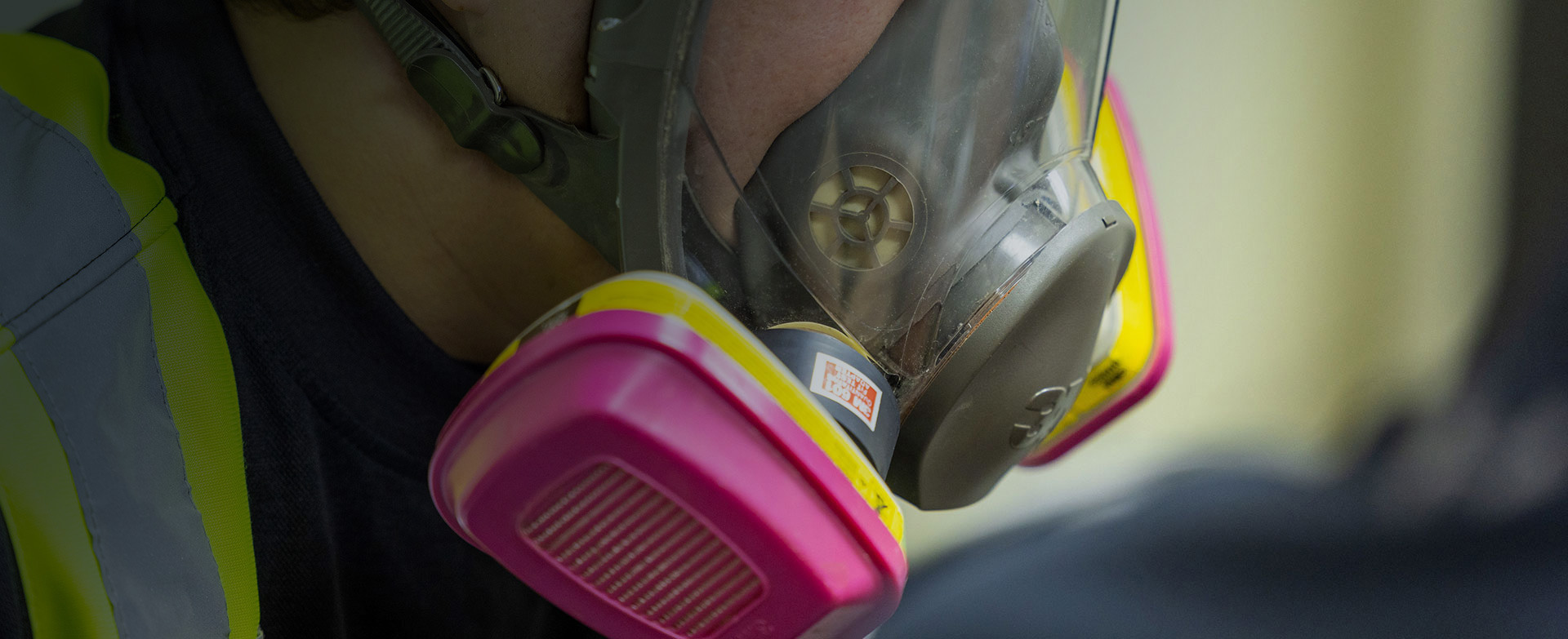
closeup of a respirator

Respirator Fit Testing


Your Office or Ours

YOUR OFFICE OR OURS, Exposure Control Consulting offers quantitative fit testing (QNFT) following (CSA) Z94.4 Selection, Care and Use of Respirators for workers using:

  • N95 Respirators
  • Half-face Respirators
  • Full-face Respirators
  • SCBA/SABA Facepieces

Who requires a fit test?


Any person who is required to wear a respirator during the course of their normal workday duties, or any person who is required to wear a respirator for emergency response activities should be fit tested to ensure an effective seal.

People working in the following industries will often need to be fit tested:

  • Healthcare including nurses, doctors, long-term care homes, dentists, orthodontists, dental hygienists
  • First responders including emergency medical services (EMS), firefighters and police officers
  • Oil and gas
  • Mining
  • Chemical production
  • Pharmaceutical and research laboratories

Student Fit Testing


Respirator fit test requirements are also for college students of various programs

Students of various programs including trades (welding, carpentry, power engineering) and health-related (nursing, social work, dental hygiene) programs often require this record before placements.

ECC is pleased to offer student discount rates.

How often is a fit test required?


Any worker who needs to wear a respirator requires fit testing prior to using the respirator for the first time. Fit testing is required at least annually as per WorkSafeBC legislation. 

FAQs


Respirator fit testing checks whether a specific make, model and size of tight-fitting respirator, such as an N95, half-face, or full-face piece, forms an effective seal against your face. This ensures that in the event of an exposure, you are protected from harmful airborne particles. There are two main types of fit tests, qualitative and quantitative. We provide the quantitative fit testing, which uses specialized equipment to objectively measure fit, and is quickly becoming an industry standard.

Respirator fit testing should be performed by someone competent in the testing method, equipment, and procedures outlined by WorkSafeBC.

We combine our expertise with our own methodology to help workers identify suitable respirator options and understand how to wear them correctly.

Quantitative fit testing (QNFT) uses a specialized machine to numerically measure the seal and leakage of a tight-fitting respirator. Unlike a qualitative test, which asks participants to try to smell or taste airborne particles through the respirator, quantitative testing uses a machine to compare the particles inside the respirator to those outside of it. This provides an objective assessment without relying on the weather’s ability to taste or smell a substance.

You put on the respirator and complete a user seal check before testing begins. Our equipment then measures fit while you perform prescribed exercises, such as turning your head, bending, and speaking.

The result shows whether that make, model, and size meets the required fit-test criteria. If it does not, we help you adjust the fit or try another size or model and repeat the test.

A user seal check is the quick, self-performed test you’ll do after putting on your respirator and before we begin fit testing. This is the same seal check you should perform before using your respirator in the workplace or classroom. There are two types of seal checks. A positive pressure check involves covering the filter or valve on the respirator with your hands and exhaling gently. It should cause some ballooning. In a negative pressure check, you inhale rather than exhale. The check is adequate if the respirator collapses inwards slightly.

According to WorkSafeBC and BC Mining Regulations, workers who are required to wear a tight-fitting respirator need fit testing. This may include healthcare workers, first responders, and workers in construction, mining, forestry, oil and gas, and manufacturing.

Students and faculty may also need fit testing for clinical placements, practical training, or other activities requiring respiratory protection.

Workers must be fit tested before first use and at least once per year. In Alberta, workers must be fit tested at least every two years.

A poorly fitting respirator can allow contaminated air to leak around its edges. Fit testing helps identify a respirator that seals effectively to your face, because one make, model, or size will not fit everyone.

An effective seal is only part of respiratory protection. The respirator must also be suitable for the hazard, worn correctly, and maintained as required.

All tight-fitting respirators, meaning those that form a seal against your face, can and should be fit tested. Some of the most frequently used and tested types include

  • filtering facepiece respirators such as N95 respirators;
  • half-facepiece respirators, which cover the nose and mouth;
  • full-facepiece respirators, which cover the eyes, nose, and mouth;
  • Tight-fitting facepieces used with powered air-purifying respirators (PAPRs);
  • Tight-fitting facepieces used with self-contained breathing apparatus (SCBA) or supplied-air breathing apparatus (SABA).

If your respirator is loose-fitting, meaning it is a hooded or helmet-style, you will not need fit testing for it.

In BC, respirator fit testing is required before you use a respirator, at least once every year, whenever your respirator facepiece changes, and anytime there is a significant change in your facial structure that could affect the fit. Some causes of changing facial structure could include weight changes, facial surgery, dental work, or an injury.

A respirator fit test takes approximately 7 – 15 minutes per test. For group sessions, the total appointment time will depend on the number of workers being tested and the number and types of respirators involved.

Bring the respirator you use at work or school, if you have one. Reusable respirators should be clean and in good condition. Bring any eyewear or personal protective equipment (PPE) worn with the respirator that could affect its fit, such as safety glasses, hard hats, or hearing protection.

If you need a respirator for your appointment, please contact us before booking to confirm available makes, models, sizes, and any additional costs. Your employer or school may require a specific respirator.

Tight-fitting respirators cannot form a safe, effective seal if your facial hair interferes with the sealing surface. Even stubble can prevent a proper seal. You must be clean-shaven before coming in for respirator fit testing.

However, if you have facial hair for medical or religious reasons, please let us and your employer know before your appointment. A loose-fitting respirator with a hood or helmet may be a better option for you, depending on your workplace and circumstances.

Failing a respirator fit test just means that one specific respirator didn’t form a sufficient seal against your face. It does not mean that you cannot use respiratory protection or that you can’t do your job. If one respirator doesn’t work for you, we’ll try another one.

The goal of the fit testing is to determine which respirator options work for you, and it’s not unheard of for a person to fail one or even several tests. There is always at least one respirator that will work for you.

Yes, we do offer group respirator fit-testing sessions and student fit testing at Exposure Control Consulting. Group sessions are available at hourly rates for large groups, and pricing depends on the number of people we will be testing, the location, respirator types, your industry, and which hazards your respirators need to protect against.

We also provide discounted rates for students in programs where fit-test documentation is required before a placement, such as health sciences, welding, carpentry, and power engineering.

If you would like a quote for your organization, please feel free to reach out to us.

Yes, at Exposure Control Consulting, we provide a wallet card documenting your successful fit test that includes:

  • the date,
  • your name,
  • your respirator’s size, make and model,
  • the type of test we performed,
  • the test results, and
  • expiry date of your fit test

Yes, you can. Qualitative fit testing often requires that you refrain from eating, chewing gum, or drinking anything but water for at least 15 minutes before your test, since it can interfere with the tests themselves, but the quantitative fit testing we provide doesn’t rely on your sense of taste or smell to be effective.

Please avoid smoking for at least 30 minutes before testing, as residual particles in your breath can affect the results.

If you’re regularly wearing a tight-fitting respirator, you should be shaving regularly to keep yourself protected. WorkSafeBC requires that workers maintain whatever conditions allow for an effective seal while working, which includes avoiding facial hair in the sealing area.

Group Sessions and Discount Rates


We are happy to provide hourly rates for larger groups. Please request a quotation for the best pricing available by using the contact form provided, with the following information:

  1. Number of Candidates
  2. Location
  3. Type of Respirator(s) 
  4. Type or hazard or industry

We make sure you can access respirator fit testing services when you need it. We offer a 24-hour call out service to take on any size of job. Contact us for your fit testing needs.

Consent(Required)